








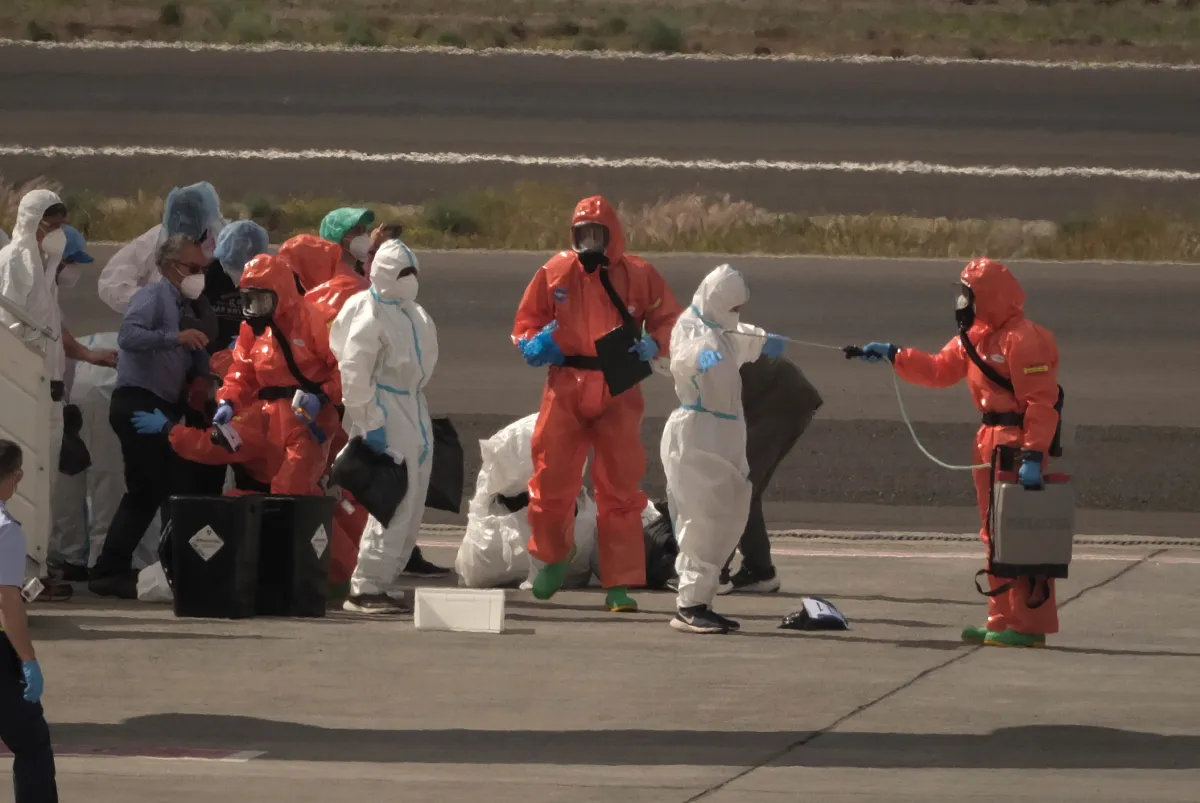
The Centers for Disease Control and Prevention (CDC) is monitoring 41 people in the United States for the Andes strain of hantavirus following a deadly outbreak on a cruise ship last month, officials said.
The hantavirus-stricken ship MV Hondius was on a trip from Argentina to the Antarctic and several isolated islands in the South Atlantic Ocean when the outbreak was identified in April. The World Health Organization (WHO) said on Wednesday that a total of 11 hantavirus cases linked to the cruise had been reported worldwide, including three deaths. Eight cases have been confirmed by laboratory tests.
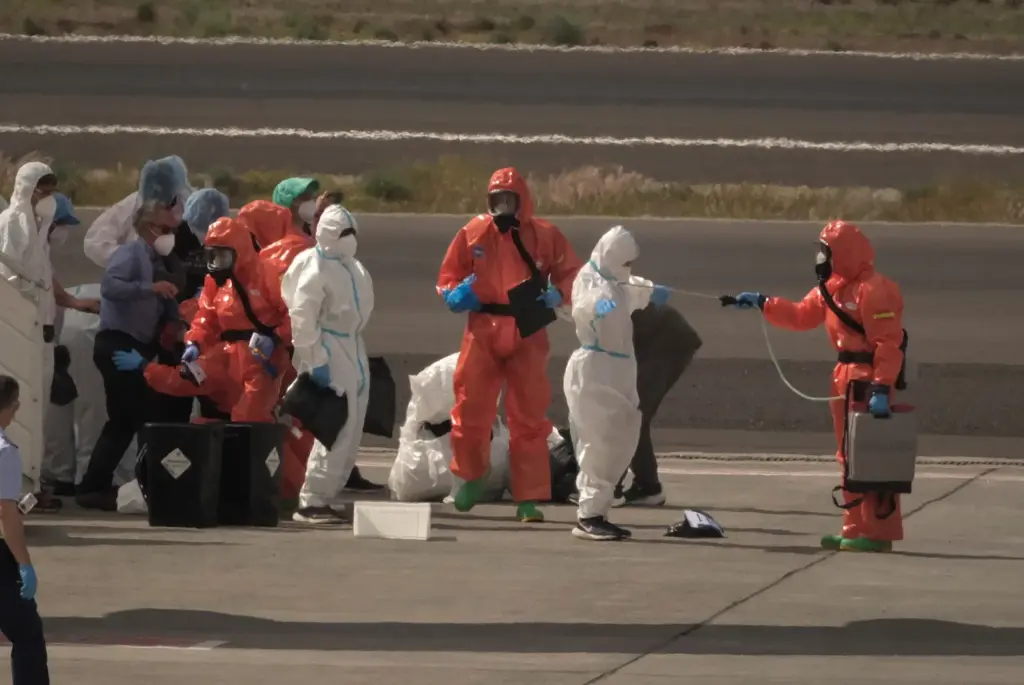
The CDC said 18 individuals were in quarantine in Nebraska and Atlanta after they were evacuated from the ship. Other people being monitored include passengers who returned to the U.S. after being on board the ship before the outbreak was detected, and those who may have been exposed to the virus during travel.
Read More on News



CDC officials said there were no hantavirus cases in the U.S., and the risk to the public remained low.
“Most people under monitoring are considered high-risk exposures, and CDC recommends that everyone under monitoring stay at home and avoid being around people during their 42-day monitoring period,” David Fitter, the incident manager for the CDC’s hantavirus response, said on Thursday.
He continued, “We’ve emphasized not to travel. And across all these groups, our focus is ensuring appropriate health monitoring and quick access to care if needed.”
What Is Hantavirus?
Hantavirus is a family of viruses most commonly transmitted to humans through contact with infected rodent urine, feces or saliva, often when contaminated dust becomes airborne and is inhaled.
In the United States, most hantavirus infections are associated with exposure to rodent droppings in enclosed or poorly ventilated spaces, such as cabins, barns or homes. The virus is rare but can cause a severe and potentially fatal illness known as hantavirus pulmonary syndrome.
Health officials stress that most North American strains of hantavirus do not spread from person to person, which is a key reason experts say the current risk to the general public remains low.
However, the Andes strain identified in the cruise ship outbreak is unique. It is the only known hantavirus strain capable of limited human‑to‑human transmission, typically occurring during prolonged close contact with an infected person, according to the CDC and WHO.
Hantavirus Case Tracker
Read more Hello world!
What Are Symptoms of Hantavirus?
Hantavirus symptoms often begin with flu‑like signs but can rapidly progress to life‑threatening respiratory illness.
Early symptoms commonly include these:
- Fever
- Fatigue
- Muscle aches, particularly in the thighs, hips and back
- Headache and dizziness
- Nausea, vomiting or abdominal pain
Some patients later develop a sudden and severe respiratory phase, marked by shortness of breath as fluid builds up in the lungs. This stage can require intensive medical care, including mechanical ventilation and advanced life‑support measures.
Doctors note that because symptoms can worsen quickly, anyone who develops flu‑like illness after known rodent exposure or contact with a confirmed case should seek medical attention immediately.
Is There a Vaccine?
There is no vaccine or cure for hantavirus, but the WHO says early detection and treatment improves survival rates.
Doctor Leaves Biocontainment Unit
A retired oncologist was cleared to leave the biocontainment unit at the University of Nebraska Medical Center (UNMC) in Omaha on Wednesday.
Dr. Stephen Kornfeld was among the 18 Americans evacuated from the ship on Sunday after being flown back to the U.S. to be quarantined.
But he was the only American who was placed in an isolated biocontainment unit after a nasal swab he took on the ship produced inconclusive results about whether he had the virus. Kornfeld had helped care for fellow passengers who became sick on board.
A hospital spokesperson has confirmed to Newsweek that he has now joined 15 other Americans who are being monitored at the National Quarantine Unit at the UNMC. Two other Americans are being monitored at Emory University Hospital in Atlanta.
Kornfeld spoke with CNN on Tuesday while in the biocontainment unit.
He told the outlet that he and other ship passengers had fallen ill with flu-like symptoms in the middle of April, but he said he had no symptoms now.
“I had three days of night sweats, a lot of chills, some mild respiratory and a lot of fatigue. And while the night sweats and the respiratory stuff cleared up pretty quickly, the fatigue lingered for two and a half weeks,” he said.
Kornfeld continued: “At the time, it was felt like this was just some virus. And now, in retrospect, there is a question, could it have been hantavirus? But it’s just speculation. There’s no way to really know.”
Which States Are Monitoring People for Hantavirus Exposure?
Seven states are monitoring 16 people who were not on the cruise ship but were potentially exposed to hantavirus during travel.
Those states are California, Kansas, Maryland, Minnesota, New Jersey, North Dakota and Washington.
Five states—Arizona, California, Georgia, Texas and Virginia—are also monitoring seven Americans who returned home in April after being on the cruise ship.
California
The California Department of Public Health said on Monday that it was monitoring a California resident who was on an international flight and had sat near one of the cruise ship passengers who was confirmed to have the Andes strain of hantavirus.
The department said in a news release that the individual was “under active monitoring in California due to potential exposure with a confirmed case on a shared flight.”
Kansas
Three Kansas residents under monitoring by the state’s health department were transported to a hospital for observation, ABC News reported on Thursday.
The Kansas Department of Health and Environment (KDHE) had announced on Tuesday it was monitoring three individuals in coordination with the CDC and the local health department.
“The exposure occurred internationally after contact with an individual from the MV Hondius cruise ship who later tested positive for Andes hantavirus,” the KDHE said in a news release.
KDHE said at the time that those individuals were not showing any symptoms, and that the risk to the public was “extremely low.”
Maryland
The Maryland Department of Health said on Monday that it was monitoring two residents who were “on a flight that briefly included [an] M/V Hondius cruise ship passenger infected with hantavirus.”
The department said: “Health authorities are taking these steps out of an abundance of caution. At this time, the risk to the public in Maryland remains very low.”
Minnesota
The Minnesota Department of Health said on Tuesday that it was monitoring one person who might have been exposed to an infected cruise ship passenger.
That person has “been very cooperative, and we are monitoring them daily for symptoms. The person does not currently have symptoms,” according to a department news release.
New Jersey
The New Jersey Department of Health said on May 8 that it was notified by the CDC that two residents were “potentially exposed to a person infected with hantavirus” during air travel.
The department said neither individual was reporting symptoms “suggestive of hantavirus.”
It added: “At this time, the risk to the general public in New Jersey remains very low. No current hantavirus cases have been identified in the state, and there is no history of a confirmed hantavirus case reported in New Jersey.”
North Dakota
The state’s health department said it was monitoring five people who were exposed to a sick hantavirus cruise ship member abroad, ABC News reported. None of the five people was on the cruise ship.
Washington
Health officials for Seattle and King County said they were notified by the Washington State Department of Health and the CDC that two King County residents were on a plane near a passenger from the cruise ship who was removed before takeoff and later tested positive for hantavirus.
The two residents returned to King County and were not showing any symptoms, officials said.
The department added, “They are being monitored for symptoms at home in coordination with Public Health—Seattle & King County.”
This is a developing story. More to follow.