








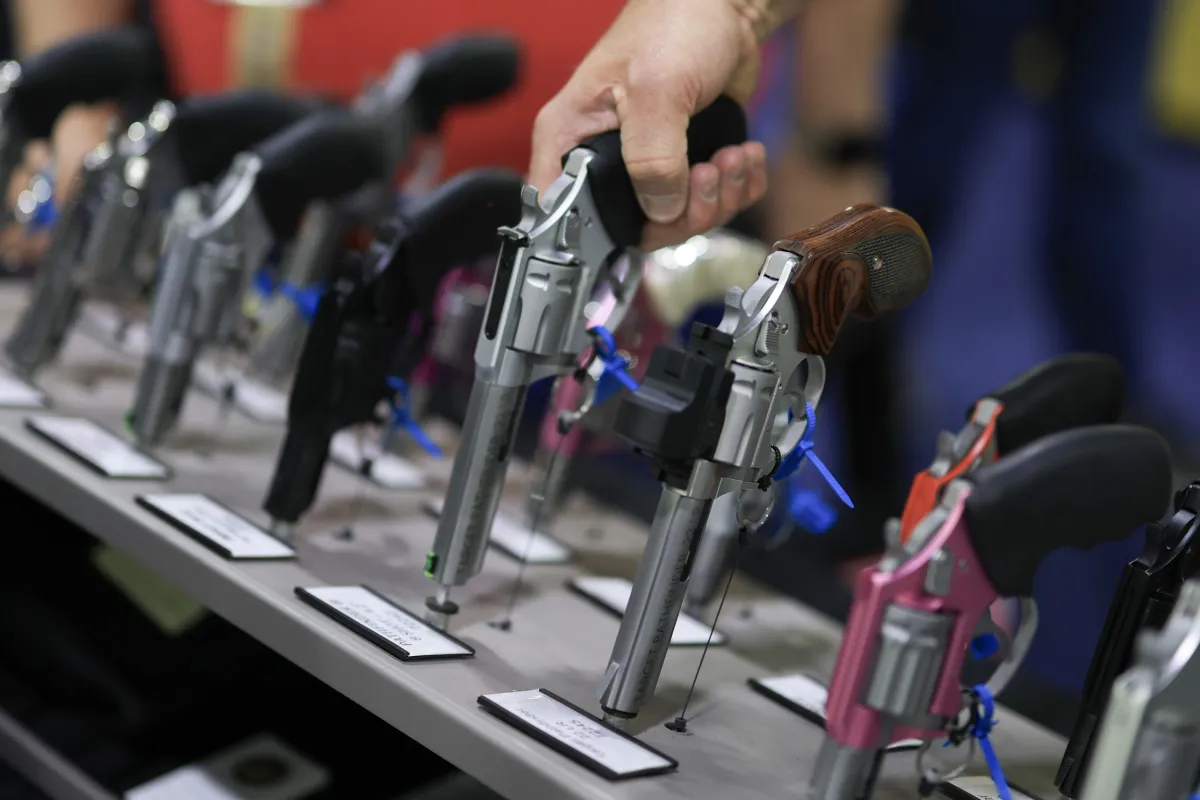
An Ohio lawmaker’s proposal to require gun owners to store firearms out of reach of children would, if passed, shift the state into a growing group that treats safe storage as a legal obligation.
Read more Milan Momcilovich Sends Clear Message to Kentucky’s Mark Pope as Decision Looms
But it would not resolve a broader national divide: millions of Americans still live in states where there is no requirement to lock guns away from children.
A Patchwork of State Laws
There is no federal mandate governing how firearms must be stored in the home. Instead, states set their own rules, producing a fragmented system that legal analysts often describe as a patchwork.
Data compiled by Everytown Research & Policy shows that 26 states have adopted secure storage or “child access prevention” (CAP) laws, leaving 24 states without such a policy in place.
Ohio is currently among the states without a statewide requirement. The new proposal would move it into the group that has formally adopted safe storage laws—though what those laws require varies significantly.
Three Different Legal Standards
Even among the 26 states that have adopted storage laws, protections differ depending on how strictly they are written and enforced. Using Everytown’s classifications, states broadly fall into three categories based on when the law applies.
1. States With Preventive Requirements
In some states, the law requires gun owners to secure firearms before anything goes wrong. These rules typically apply when a gun is not under the owner’s immediate control or when a child could potentially gain access.
States in this category include California, Massachusetts, New York and Oregon, among others.
In these jurisdictions, simply leaving a firearm unsecured in a home with a child can lead to legal consequences—even if the weapon is never used.
2. States With Reactive or Limited Laws
Other states have narrower rules that only trigger after a child gains access to a firearm, particularly if that access results in harm.
States such as Florida, Texas and Washington fall into this category under Everytown’s framework.
Read more List of Resignations Under Trump As Border Chief Quits
In practice, this means owners are often not breaking the law by failing to secure a weapon—unless a child actually obtains it.
3. States With No Adopted Storage Policy
Finally, 24 states—including Ohio—are listed as having no adopted secure storage or CAP policy in this ranking.
These states include Alabama, Alaska, Arizona and Tennessee, along with much of the South and Mountain West.
In these jurisdictions, gun storage is largely treated as a matter of personal responsibility rather than a legal requirement. While broader negligence laws may still apply in extreme cases, there is typically no explicit obligation to lock firearms away from children.
Why the Distinction Matters
The debate over safe storage laws is often tied to concerns about children accessing unsecured firearms. Research reviewed by RAND has found that child access prevention laws are associated with reductions in unintentional shootings and suicides among young people, suggesting that how guns are stored can have measurable public health effects.
Supporters of stricter laws argue that requiring safe storage is a common-sense measure that can prevent accidents and reduce youth deaths. Critics, however, contend that such laws can be difficult to enforce and may interfere with a gun owner’s ability to quickly access a firearm for self-defense.
What Is Being Proposed in Ohio?
The proposal—known as “Amya’s Law”—was introduced by state Representative Darnell Brewer, a Cleveland Democrat, following the death of 11-year-old Amya Frazier, who was fatally shot in December 2025 after a 14-year-old relative accessed an unsecured gun at a Columbus home.
The bill is backed by Amya’s family, who have called for accountability measures to prevent similar tragedies.
Rather than mandating that all firearms be locked away, the legislation would impose criminal penalties on gun owners if a child gains access to a negligently stored weapon and causes harm, an approach Brewer has framed as targeting preventable accidents without restricting gun ownership.
Read more Republican Judges Side with Texas Democrats Who Fled State