









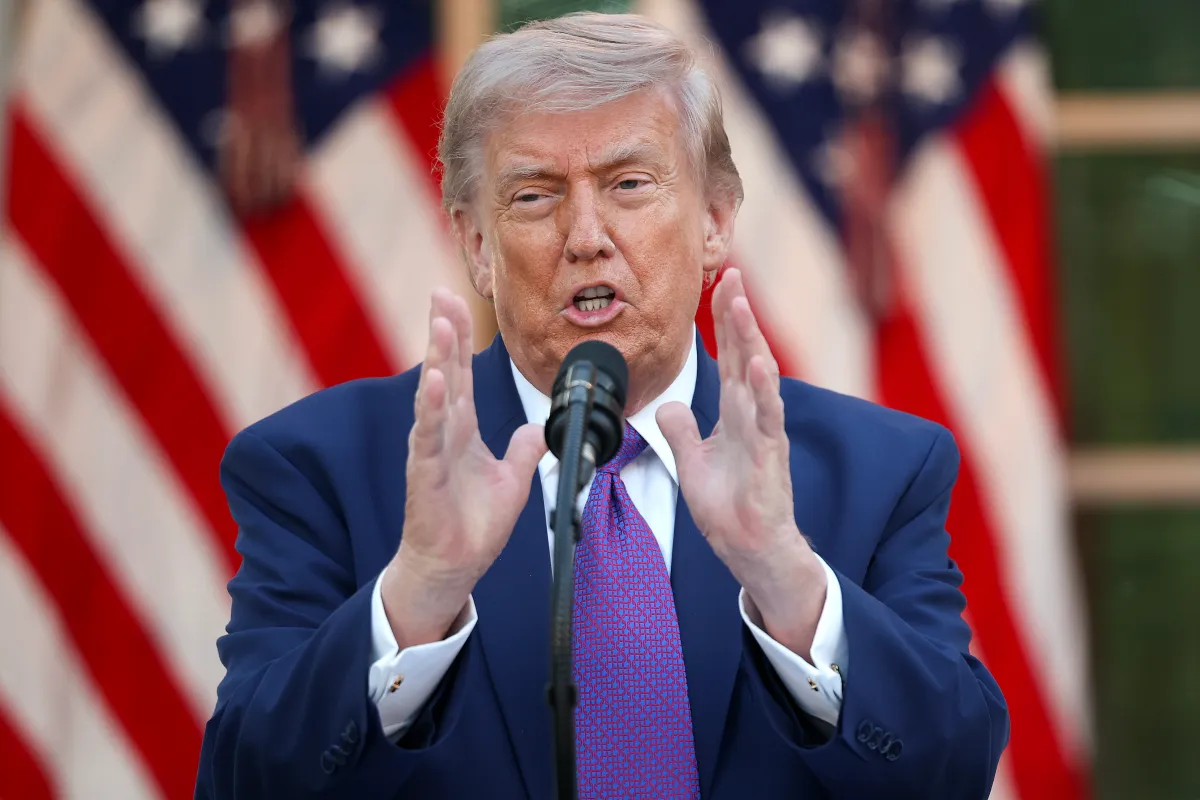
President Donald Trump plans to drop his $10 billion lawsuit against the Internal Revenue Service (IRS), according to a court filing submitted Monday, in a move tied to discussions over a multibillion-dollar compensation arrangement, his legal team indicated.
Read more Map Shows Where Heavy Snow To Hit Wyoming, Colorado
Trump’s attorneys informed a federal judge that the president intends to dismiss the case, which stems from the leak of his tax returns. The lawsuit, filed earlier this year in federal court in Florida, accused the IRS of failing to prevent the unauthorized disclosure of confidential tax information by a government contractor.
The contractor, who pleaded guilty in 2023, admitted to leaking Trump’s tax data—along with that of other wealthy Americans—to media outlets in 2019 and 2020. Trump had sought at least $10 billion in damages, arguing the leak caused significant financial and reputational harm.
The decision to abandon the lawsuit comes as negotiations advance on a plan that would establish a compensation fund worth roughly $1.7 billion to $1.8 billion. The proposed fund would be designed to compensate individuals who allege they were improperly targeted by the federal government during the Biden administration.
While details of any finalized agreement remain unclear, the court filing itself did not outline specific settlement terms. Instead, it indicated that the case was still at an early stage and that Trump was voluntarily dismissing the lawsuit, a step that typically does not require judicial approval.
Legal experts have noted that the case faced unusual complications because Trump, as president, was effectively suing agencies under his own administration. A federal judge overseeing the matter had already raised questions about whether the case met constitutional requirements for a legitimate legal dispute between opposing parties.
“Although President Trump avers that he is bringing this lawsuit in his personal capacity, he is the sitting president and his named adversaries are entities whose decisions are subject to his direction,” District Judge Kathleen M. Williams wrote in an issued in April.
Read more Donald Trump’s Approval Rating Plummets With Least Educated White Americans
It was “unclear,” the judge wrote, whether the Constitution allows for the president to sue the IRS.
The dismissal is expected to be filed “with prejudice,” meaning Trump would be barred from bringing the same claims again in court.
An attorney representing Trump has argued that the IRS improperly allowed the disclosure of private information and that the president remains committed to holding responsible parties accountable.
The broader compensation proposal has drawn scrutiny from critics, though final terms have yet to be officially announced.
Representative Jamie Raskin, the top Democrat on the House Judiciary Committee, called the idea “unconstitutional.” In an interview Sunday on ABC’s This Week, the Maryland lawmaker said: “This, of course, is a political grievance fund that Donald Trump can use to pay off his friends.”
The development marks a significant shift in a high-profile legal battle that has raised questions about presidential authority, government accountability and the handling of sensitive taxpayer information.
Read more Ukraine’s Strikes Inside Russia Show Kyiv’s Momentum