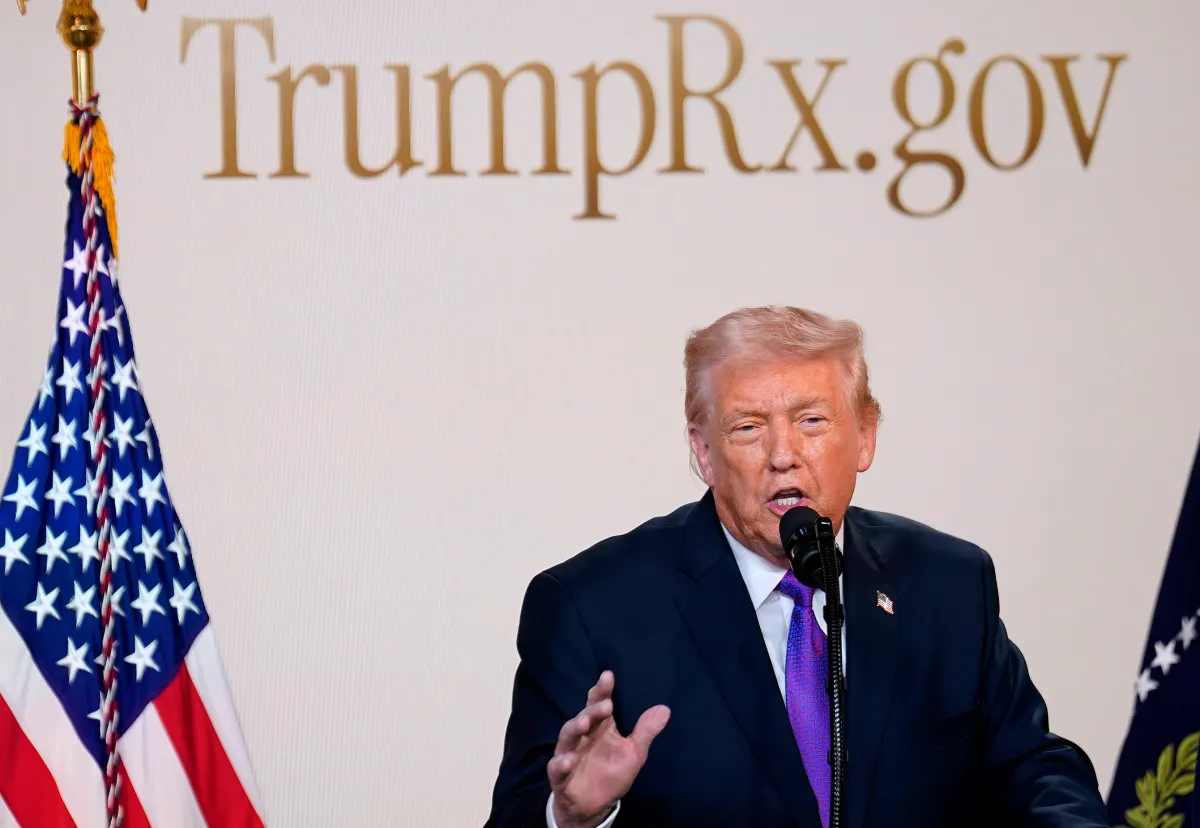









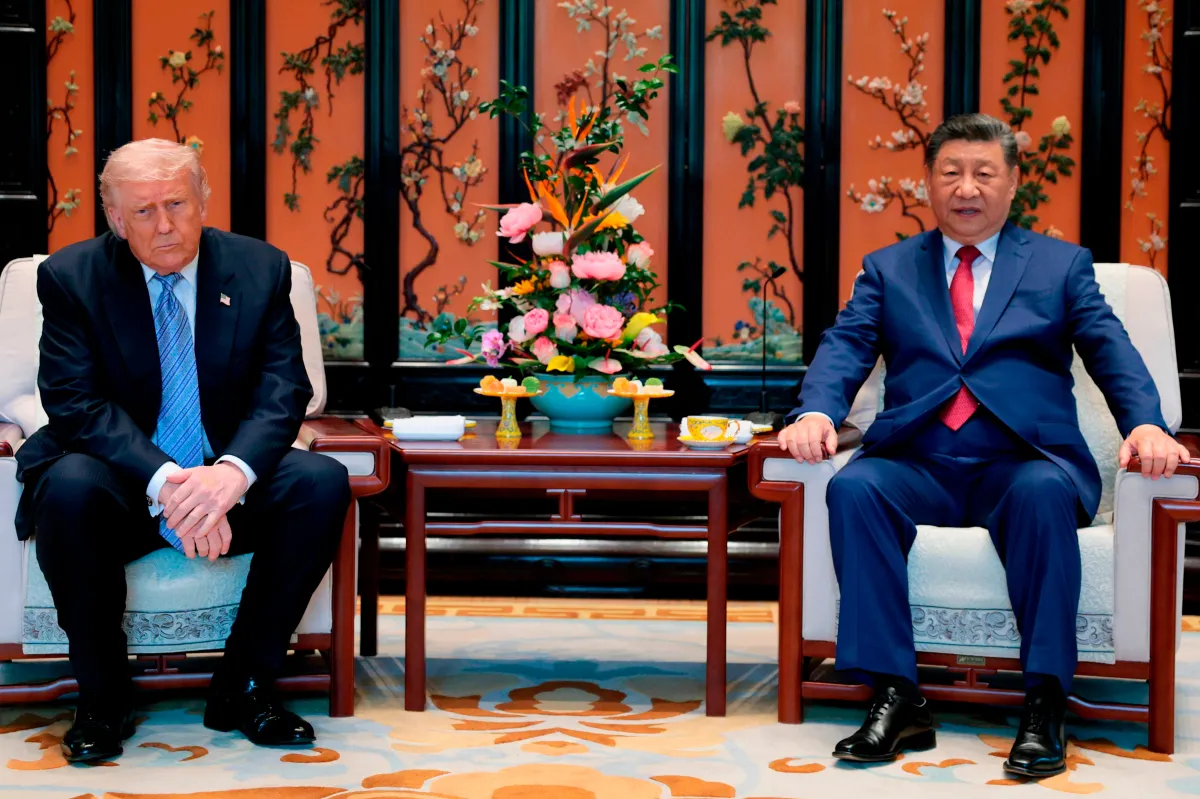
In a Truth Social post following a high-profile meeting with Chinese President Xi Jinping on Thursday, President Donald Trump said his Chinese counterpart had described the United States as a “declining nation,” while contrasting his own leadership with that of former President Joe Biden.
Read more Patrick Mahomes Golf Swing Has Fans Convinced of His Week 1 Status
Later in the post, Trump said, “Two years ago, we were, in fact, a Nation in decline. On that, I fully agree with President Xi.” Trump did not directly quote Xi in his social media post; however, Xi’s reference to the geopolitical theory known as the “Thucydides Trap” reflected the idea of a rising China challenging an established global power, the United States.
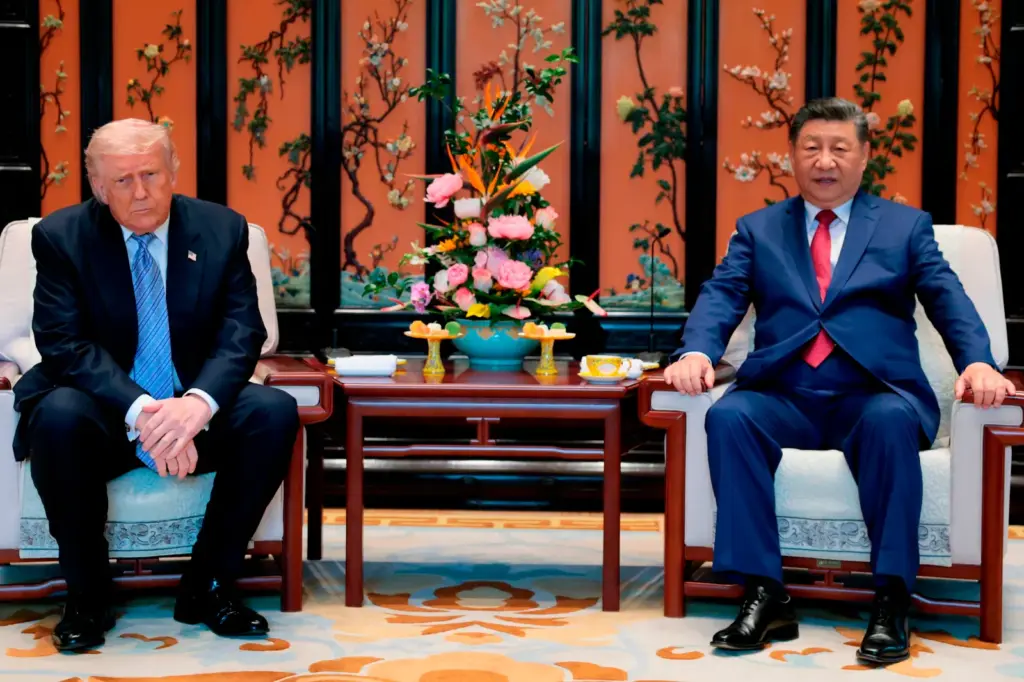
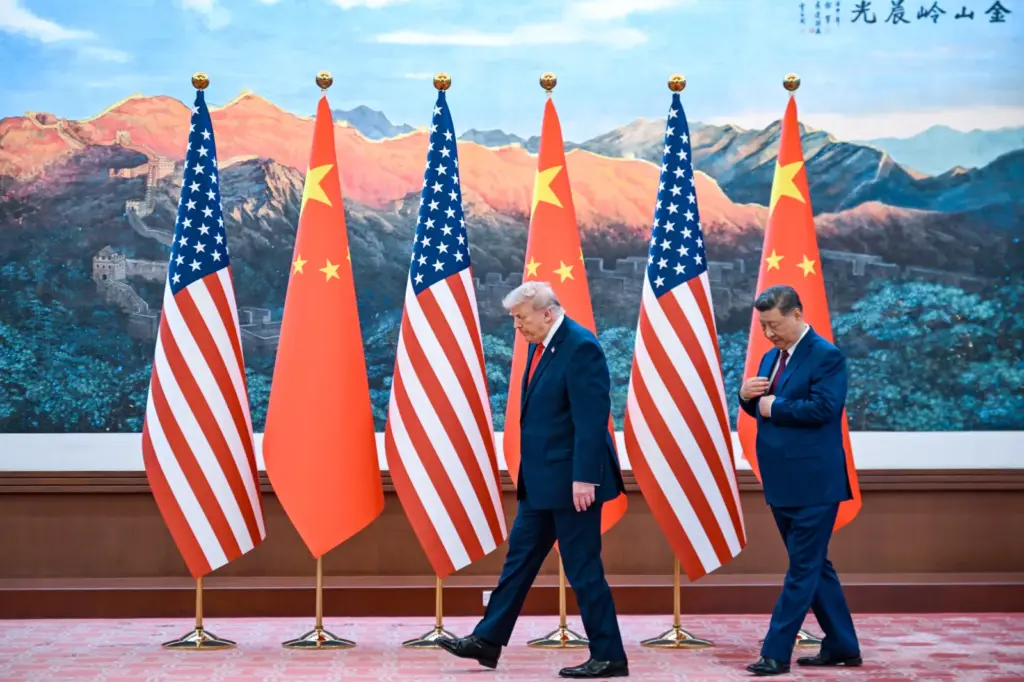
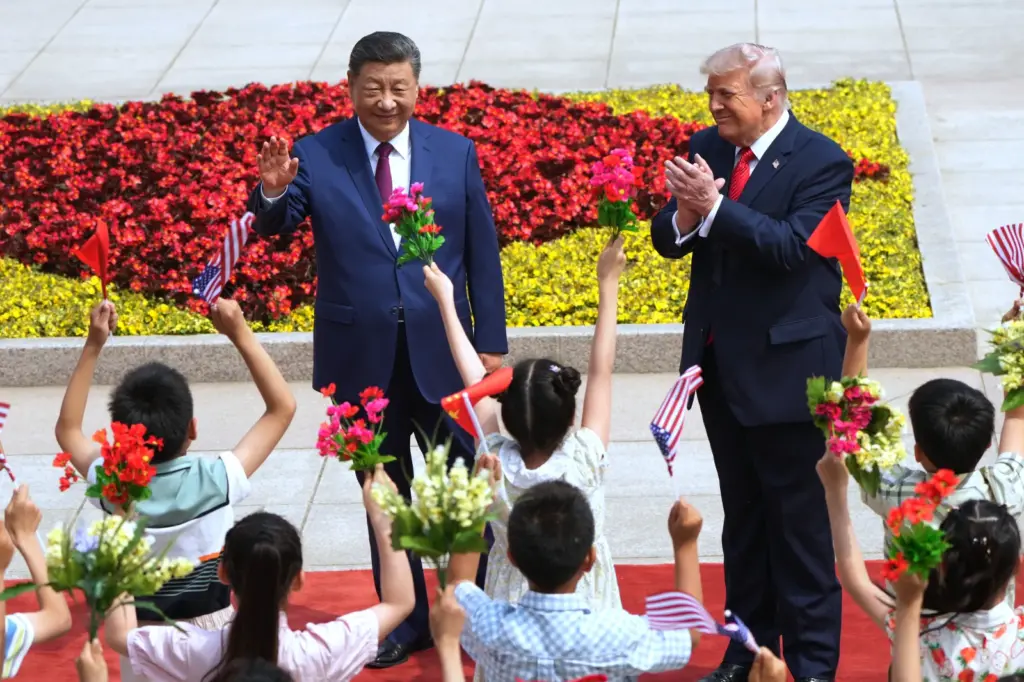
The two-day high-stakes summit between Trump and Xi brought together the leaders of the world’s two largest economies amid the ongoing Iran war and tensions over Taiwan, trade policy, and constant competition for dominance in emerging technologies, including artificial intelligence, among other industries.
The summit demonstrated “a widening mismatch between Beijing’s highly strategic and security-centric framing of the bilateral relationship in comparison to Washington’s more transactional, economically oriented approach,” Bryce Barros, an associate fellow at the GLOBSEC think tank, previously told Newsweek.
What Xi Jinping Said About the U.S.
Xi did not explicitly state in a speech that the U.S. is in decline, per the handout from China’s Ministry of Foreign Affairs.
In his opening statement, the Chinese president made a reference to the Peloponnesian War in ancient Greece, saying, “Can China and the United States overcome the ‘Thucydides Trap’ and create a new paradigm for major-country relations? Can they work together to address global challenges and inject more stability into the world?”
He went on to emphasize his desire for collaboration to work on China-US relations, adding per the Chinese Foreign Ministry handout, “Xi Jinping emphasized that China is committed to the stable, healthy, and sustainable development of China-US relations. He stated that he and President Trump agreed to establish a ‘constructive strategic and stable relationship between China and the US’ as a new positioning for China-US relations, which will provide strategic guidance for China-US relations for the next three years and beyond.”
Chinese Foreign Ministry spokesperson Mao Ning outlined in an X post the severity of the Taiwan question for U.S. and China relations, writing, “President Xi stressed to President Trump that the Taiwan question is the most important issue in China-U.S. relations. If it is handled properly, the bilateral relationship will enjoy overall stability. Otherwise, the two countries will have clashes and even conflicts, putting the entire relationship in great jeopardy.”
The post continued, “‘Taiwan independence’ and cross-Strait peace are as irreconcilable as fire and water. Safeguarding peace and stability across the Taiwan Strait is the biggest common denominator between China and the U.S.”
What Is the Thucydides Trap?
In the fifth century B.C., the Greek city-states of Athens and Sparta fought the Peloponnesian War.
Ancient Athenian historian and military general Thucydides wrote that the conflict was driven in part by Sparta’s fear of Athens’ rising power and influence, writing, “It was the rise of Athens, and the fear that rise engendered in Sparta, that made war inevitable.”
“The idea is that when an established, great power is met with a rising power, conflict between the two is certainly likely if not inevitable,” Daniel Sutton, a classicist at the University of Cambridge who studies Thucydides, told The New York Times on Thursday.
The term “Thucydides Trap” was popularized by political scientist Graham Allison. Allison has previously applied the concept to U.S.-China relations, writing in his 2017 book, Destined for War: Can America and China Escape Thucydides’s Trap?, that 12 of 16 historical cases in which a rising power threatened to displace a dominant power ended in war.
Read more Steve Bannon, MAGA Response to China Summit Reveals Cracks in Trump Base
Xi has previously used the term in his speeches, including in 2015, when he pushed back against the inevitability of the trap and noted that “should major countries time and again make the mistakes of strategic miscalculation, they might create such traps for themselves.”
How China Experts Have Interpreted Xi’s Comments
Xi’s comments about the “Thucydides Trap,” which in present day context makes China the “Athens” that is on the rise and seeking to overpower and challenge the longer standing “Sparta,” the U.S., has been seen by many regional experts as a warning to right the ship rather than a threat of war to come, although some believe it to be more aggressive in nature.
Ryan Swan, a China-U.S. relations expert at the Bonn International Centre for Conflict Studies in Germany, told The New York Times, “China views the Thucydides Trap not as a predictive model, as it has occasionally been used in Western circles, but as a threat that can and should be avoided.”
Another China expert, Bonnie Glaser, managing director of the German Marshall Fund’s Indo-Pacific program, said during a media briefing, that one of the most important things to have come out of the summit is that Xi’s pronouncement,“that the two leaders agreed on a new vision for the bilateral relationship, which he dub a relationship of ‘constructive strategic stability.’”
She continued, “I see this as aimed at locking in essentially the truce that was reached in Busan.”
Glaser added, “It is obvious that the United States, at least so far, has not endorsed this first framework. It has not tried to define what a constructive strategic stability might look like, and if the United States does not do so, then they potentially will be ceding ground to the Chinese to define it for the United States.”
Later on, Glaser said, “It was noteworthy to me that in the Chinese readout that China continues to accept competition between the two countries, that was a concession they made during the Biden administration after about two years of resisting that framing. But now the Chinese say explicitly they want limits on that competition, they want to manage it.”
Kevin Rudd, former president and CEO of the Asia Society, told ABC News that what is notable from the summit is the “warnings of danger and the warnings of the possibility of clash and conflict if [Taiwan] is mishandled.”
Retired U.S. Army Lieutenant General Mike Flynn and former National Security Advisor to Trump said in a lengthy X post that Xi’s use of the term “Thucydides Trap” is “a reminder to our president (and the world) that Beijing (Xi) sees itself as the rising power in a structural rivalry with a (supposedly) established hegemon (the U.S.), and that any failure to accommodate China’s ascent risks major conflict which the United States cannot afford (and there is practically zero support from the American people currently for more war and Xi knows it).”
He added, “essentially, it was a veiled warning.”
CBS national security analyst Aaron MacLean said in a Friday video that the use of the term was an “extremely aggressive statement about China’s view that it is on the rise and America is declining.” He continued to state that the use of the term was a way for Xi to express “his belief that China’s rise is inevitable and that the United States needs to accept essentially that Chinese power is going to surpass American power.”
MacLean continued, “It’s a way of warning that if America doesn’t accept this, that war is borderline inevitable.”
Read more Paul Pierce Urges LeBron James to Retire After Lakers’ Playoff Exit