









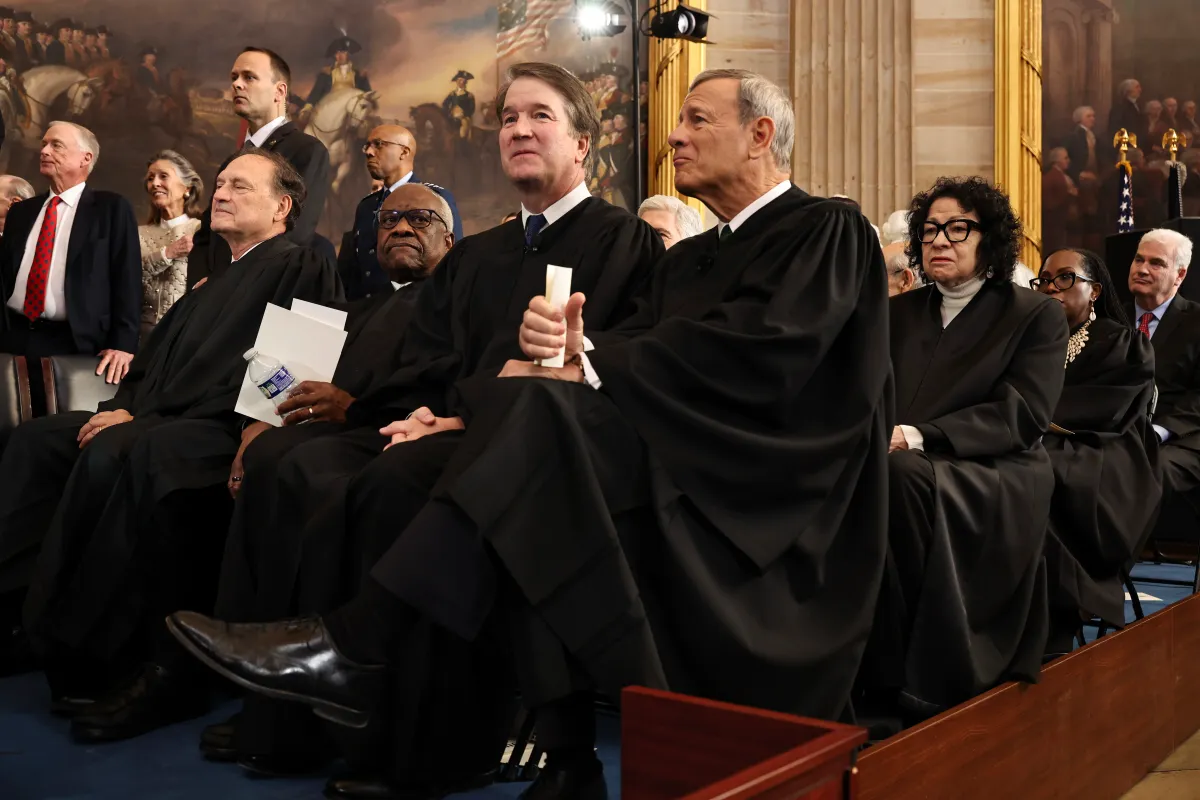
The Supreme Court on Friday rejected Virginia Democrats’ bid to revive a voter-approved congressional map, leaving in place a state court ruling that invalidated the effort on procedural grounds.
Read more Dillon Brooks Takes Shot at LeBron James’ Lakers Teammate After Playoffs
The decision comes amid a broader mid-decade redistricting fight that has intensified after a recent High Court ruling weakened the Voting Rights Act and opened the door to new partisan maps.
Virginia’s proposed map, which could have helped Democrats gain up to four House seats, was struck down by the state’s top court in a 4-3 ruling that found lawmakers violated constitutional requirements when putting the measure before voters.
With the Supreme Court declining to intervene, the state will proceed with 2026 midterm elections under its current congressional districts.
The court issued a concise ruling, accompanied by no opinions and no dissents. The order merely said: “The application for stay presented to The Chief Justice and by him referred to the Court is denied.” An application usually requests emergency action, which merely asks the court to issue a stay, injunction or immediate intervention unless it dismisses the application and lets the order stand.
The fact that the application had no opinions or dissents is no indication on the merits of the case, nor does it mean all of the justices agreed to the order, but only that they did not do so publicly.
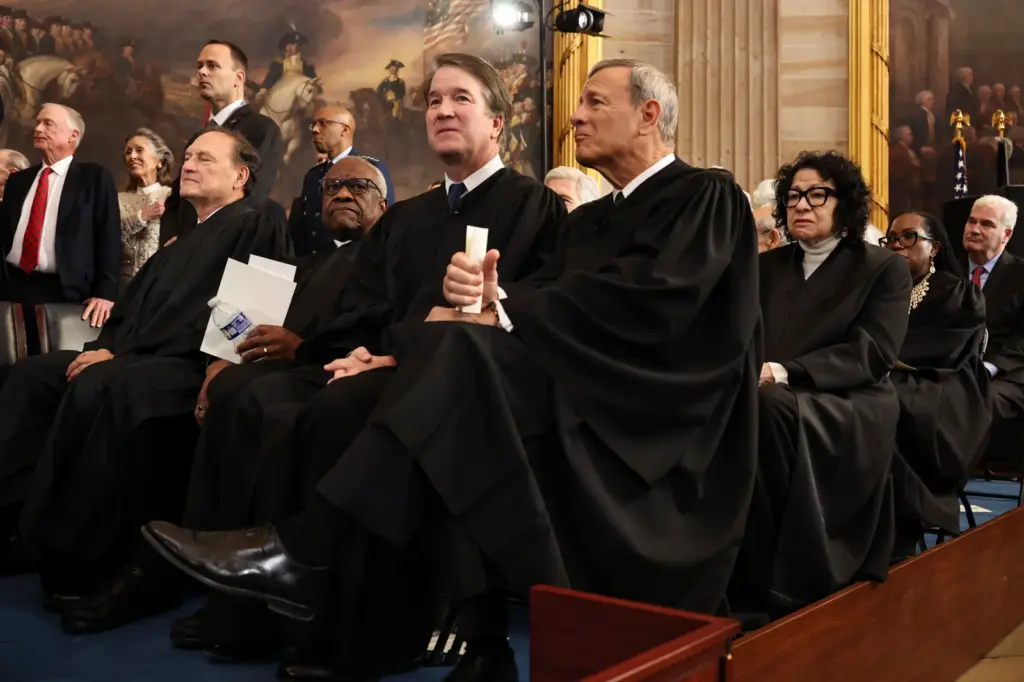
Virginia’s Road to the Supreme Court
Virginia voters passed the new map in April, with Democrats casting it as retaliation after Republicans in states like Texas, Missouri and North Carolina redrew their maps ahead of the midterms with the aim of drawing Democratic incumbents into more conservative seats.
The Virginia Supreme Court’s 4-3 ruling, however, invalidated the referendum results and restored the current map, which has six seats held by Democrats and five by Republicans.
Read more Republicans Lash Out Over Pentagon’s Call Against Sending Troops to Poland
Democrats argue the Virginia court “overrode the will of the people” who narrowly approved the amendment last month, saying the state must use the new map rather than revert to districts voters rejected.
The state court ruled the amendment invalid because the legislature began the ballot‑placement process after early voting had already launched in the fall’s general election, a procedural violation under the Virginia Constitution.
Changes to the Voting Rights Act
The Supreme Court’s recent ruling in Louisiana v. Callais struck down a congressional map that created a second majority-Black district, with the justices concluding it relied too heavily on race and violated the Constitution’s Equal Protection Clause.
The 6-3 decision reflects a shift in how the court interprets the relationship between the Constitution and the Voting Rights Act, particularly in cases involving race-conscious redistricting.
The ruling is widely viewed as narrowing the reach of a key provision of the act by limiting how race can be used to address disparities in political representation.
Critics say the decision could weaken long-standing protections by making it easier for state legislatures to redraw maps in ways that diminish the voting power of minority communities, even if those effects arise indirectly.
However, supporters of the ruling argue it reinforces constitutional limits by preventing governments from relying too heavily on race in policy decisions, including redistricting.
Read more Trevor Lawrence Didn’t Actually Cut His Hair For Jaguars’ Schedule Release