








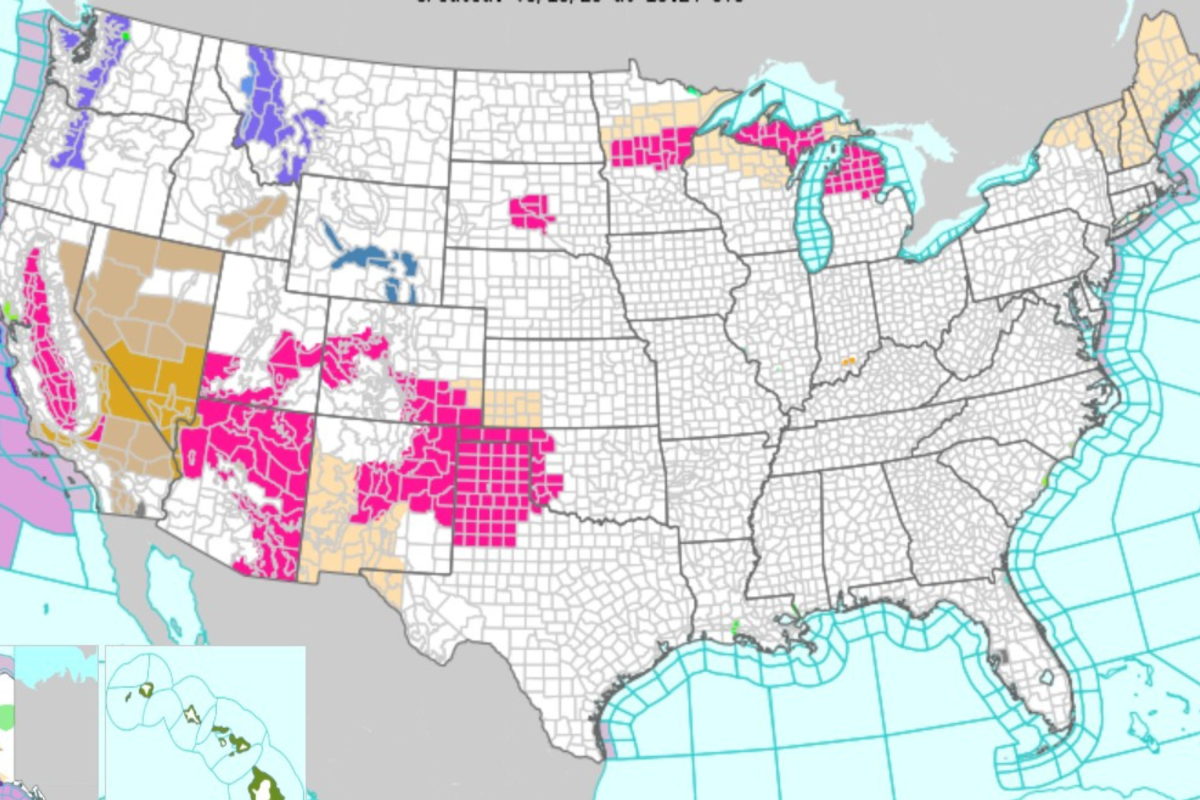
Millions of people across the Plains, West and Southwest are under critical fire‑weather alerts, with the National Weather Service (NWS) urging residents in 11 states to avoid burning anything outdoors as warm temperatures, low humidity, and strong winds create conditions where any spark could ignite a fast‑moving wildfire.
Read more Raiders Urged to Find Solid Targets for Fernando Mendoza, Kirk Cousins
Much of the area remains locked in deep drought, with parched grasses and critically dry fuels primed to ignite under even the smallest spark.
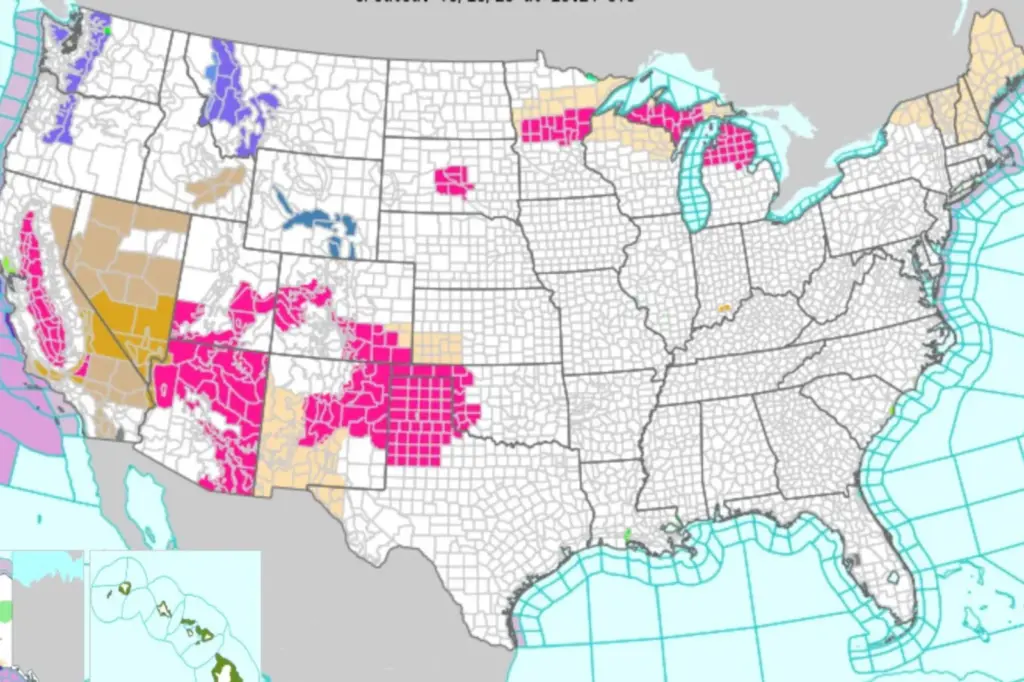
Where Are Warnings Issued?
The NWS has issued red flag warnings and fire weather watches across the following states:
- Texas: Large portions of the Texas Panhandle remain under fire‑weather warnings as dry grasses, low humidity, and gusty winds create conditions where even small sparks can trigger fast‑moving fires.
- Oklahoma: The Oklahoma Panhandle faces similar critical fire danger, with officials urging residents to avoid any activity that could generate open flames or sparks.
- Kansas: Central and western Kansas are under red flag warnings as warm temperatures, strong winds, and very low humidity combine to make rapid fire spread likely.
- New Mexico: Much of New Mexico is experiencing critical fire‑weather conditions driven by single‑digit humidity and gusty winds capable of pushing flames across dry terrain.
- Colorado: Eastern Colorado faces elevated fire danger as dry air and strong downslope winds increase the risk that any ignition could quickly grow out of control.
- Nebraska: Fire‑weather alerts stretch across western Nebraska, where forecasters warn that dry fuels and gusty winds could allow new fires to spread rapidly.
- South Dakota: Parts of western and central South Dakota are under red flag warnings as low humidity and persistent winds heighten the threat of fast‑moving grassfires.
- Wyoming: Fire danger is elevated across southern Wyoming, where dry conditions and strong winds are expected to create favorable conditions for rapid fire growth.
- Arizona: Arizona is forecast to see relative humidity drop to around 7 percent, with the NWS warning that any fire that starts or is already burning could spread rapidly.
- Utah: Fire danger is elevated across southern and central Utah, where dry fuels and gusty afternoon winds are expected to create conditions favorable for rapid fire spread.
- California: Much of California faces heightened wildfire risk as warming temperatures, lingering drought in several regions, and offshore wind events continue to dry out vegetation ahead of peak fire season.
When Does Wildfire Season Start in the U.S.?
Wildfire season in the United States typically begins in late spring, peaks through the summer and early fall, and tapers off by November, though hotter, drier conditions in recent years have stretched the season longer in many regions.
The Plains have already seen this firsthand, with multiple fast-moving grassfires tearing through Texas and Oklahoma ranchlands over the last few months, forcing brief evacuations. Recent history underscores how quickly these conditions turn deadly—from the Palisades fire in Los Angeles last April, which destroyed homes in steep canyon terrain, to the catastrophic 2023 Maui fire, where hurricane-force winds drove flames through drought-stricken grasslands, killing 101 people and leveling much of historic Lahaina.
Read more Dirk Nowitzki Sounds Off on Anthony Edwards’ Viral Fourth-Quarter Decision
What Is a Red Flag Warning?
A red flag warning means that critical fire weather conditions are either occurring now or will shortly.
The combination of strong winds, low relative humidity, and warm temperatures can contribute to extreme fire behavior.
Safety Measures: What Officials Advise
Emergency agencies across the region are urging residents to:
- Avoid all outdoor burning, including trash, brush, and agricultural fires.
- Postpone activities that generate sparks, such as welding or using metal‑bladed equipment.
- Secure trailer chains and avoid driving or parking on dry vegetation.
- Report smoke or fire immediately, as early detection is critical during high‑wind events.
What Happens Next
Forecasters expect the fire‑weather pattern to persist through the weekend, with the potential for multiple days of critical to extreme fire danger.
If winds strengthen or thunderstorms produce dry lightning, officials warn that wildfire risk could escalate further.
Read more New York Train Strike: List of Alternative Travel Options As LIRR Is Halted